
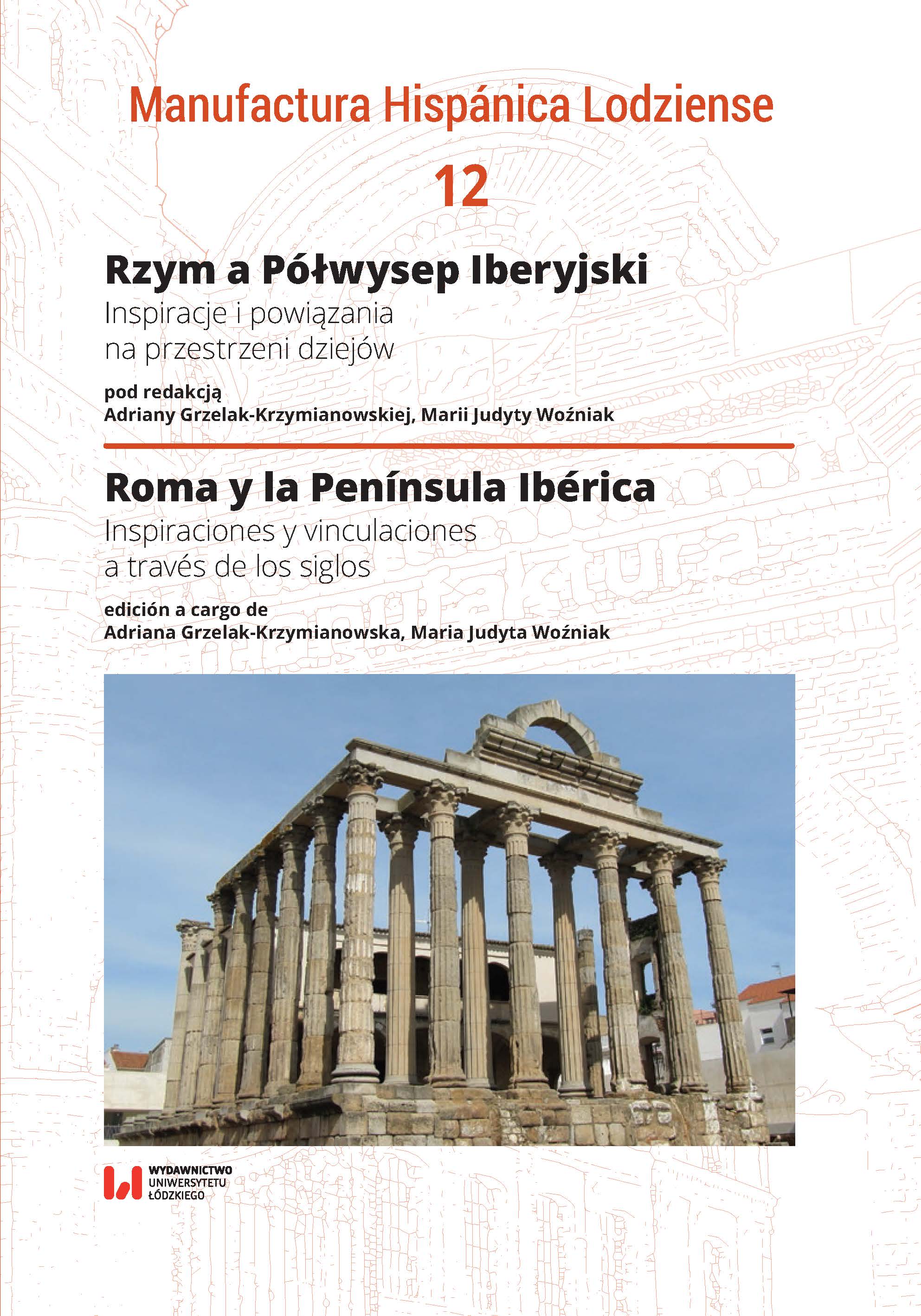
Świątynie kultu cesarskiego w stolicach prowincjonalnych w Hispanii (Tarraco, Emerita Augusta, Corduba) – status quaestionis

Date
2021Metadata
Show full item recordAbstract
The beginnings of the imperial cult in Hispania are connected with
the reign of Augustus. According to Quintilian, an altar dedicated
to him was erected in Tarraco (Hispania Citerior) when the emperor
was still alive. After the death of the Emperor, on the 17th September
AD 14 when he was deified and given the title of Divus Augustus,
the inhabitants of Tarraco decided to dedicate a temple to him. Less
than a year later, they asked Tiberius for permission to build it. The
image of the temple on the coins of Tiberius, as well as the archaeological
remains, excavated at the highest point of the city (on the site
of the present cathedral), testify to the fact that the plan was realised.
Shortly afterwards, the imperial cult spread to other provinces of
Hispania (Ulterior Baetica, Ulterior Lusitania), and temples dedicated
to the emperor decorated city forums in other cities, especially the
provincial capitals. The example of Tarraco was followed by Emerita
Augusta, where the so-called Temple of Diana was erected in the city forum and the Temple of Augustus in the provincial forum. As recent archaeological research shows, in Colonia Patricia Corduba, in the 1st half of the 1st century, a temple in honour of the emperor was also built in the provincial forum, and in the 50s of the 1st century – another one in the city forum.
Collections
The following license files are associated with this item:

Except where otherwise noted, this item's license is described as Attribution-NonCommercial-NoDerivatives 4.0 Międzynarodowe